

The Classroom is Changing
Let’s Work Together to Keep Up
TeachWell Learning is here to help teachers and administrators stay up to date with the ever-changing education landscape. We offer professional development and consulting for teachers, trainers, and administrators, as well as online courses and curriculum creation.
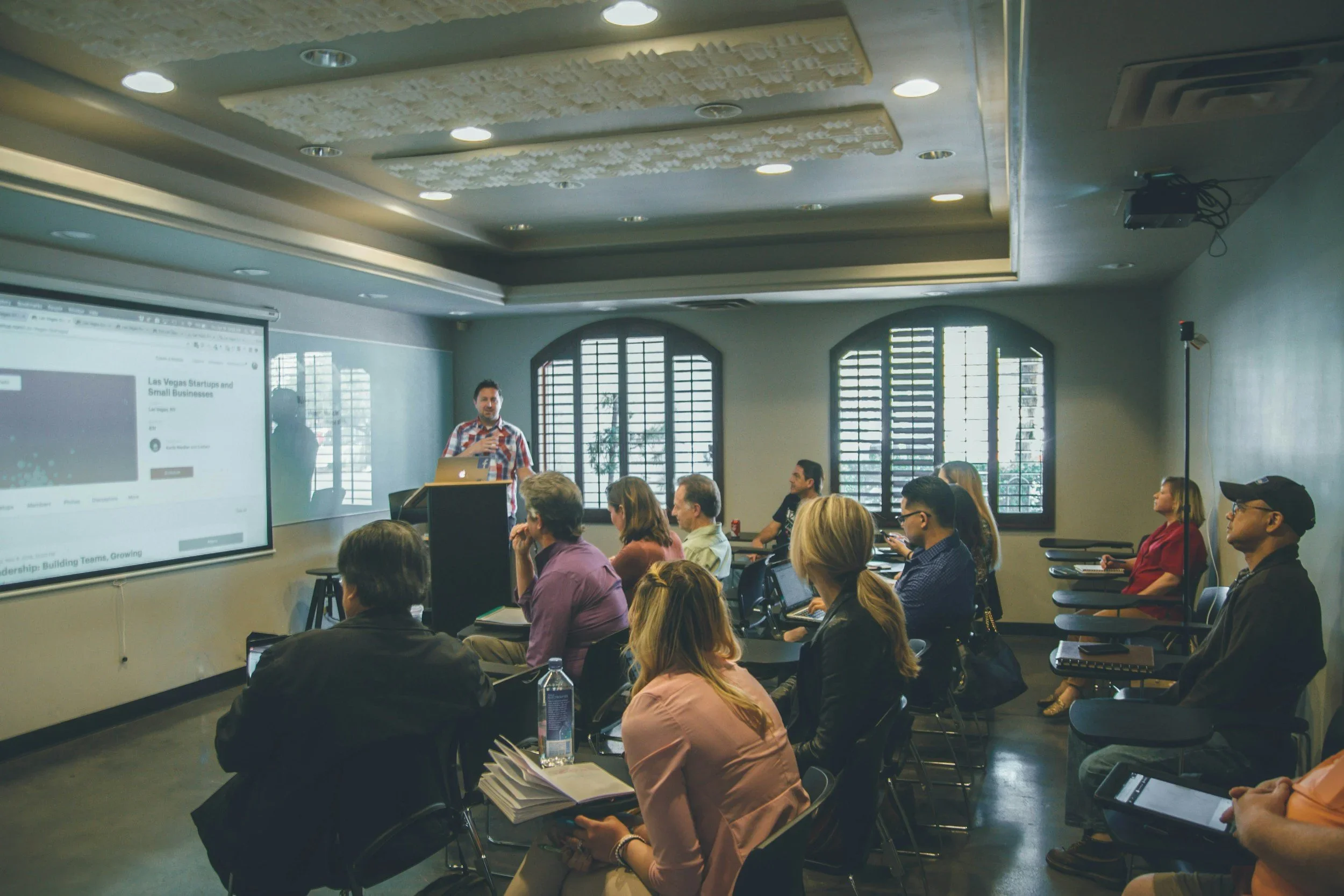

TeachWell Learning is a Texas-based education consulting firm that partners with schools and districts to strengthen instruction and support meaningful learning environments. Our services include curriculum implementation support, instructional coaching, teacher and administrator professional development, leadership development, and online courses. Led by Stephanie Treadwell, a former math teacher, instructional coach, testing coordinator, academic dean, and principal, TeachWell Learning brings real classroom, campus, and district leadership experience to every engagement, helping educators translate high-quality instructional materials into consistent, effective teaching practice.
FAQs
-
Every engagement starts with a conversation, not a proposal. Before we scope anything, we take time to understand your campus: what you're working on, where things are breaking down, what your teachers and leaders have already tried, and what your bandwidth realistically looks like.
From there, we build a plan together. Most engagements combine some mix of direct coaching (with teachers, with leaders, or both), professional development sessions, and structured check-ins over time. Some partnerships are intensive and short — a focused sprint around a curriculum launch. Others are longer-term relationships that evolve as your campus does.
What they all have in common: the work is built around your specific context, not a packaged program designed for someone else's district.
-
Pricing depends on the scope and structure of the engagement — the number of coaching visits, PD days, whether work is in-person or virtual, and how long the partnership runs. There's no flat-rate menu because a one-size-fits-all model doesn't serve districts well.
That said, we're committed to working within the financial reality of Texas campuses — including small and rural districts where PD budgets are stretched thin. We'll always be transparent about costs upfront, and we're happy to discuss how to structure an engagement that delivers real value within your budget.
The best starting point is a conversation. Reach out and tell us what you're working on — from there we can talk through what a partnership might look like and what it would cost.
-
ESC support and TeachWell Learning tend to solve different problems — and for many districts, they work best together.
Region Education Service Centers provide enormous value: curriculum training, cohort-based professional development, compliance support, and access to state initiatives across dozens of districts at once. That breadth is genuinely useful. But it also means ESC specialists are spread across a large geographic region, often supporting 40, 50, or 60+ districts simultaneously. Deep, sustained, campus-specific support is difficult to deliver at that scale — and most ESC staff would be the first to say so.
That's the gap TeachWell Learning fills. Where ESC support tends to be broad and periodic, TeachWell works inside just a few campuses or districts over time — coaching individual teachers, building specific PLC structures, monitoring fidelity in your classrooms, and adjusting based on what's actually happening on your campus. It's the difference between regional training and a partner who knows your teachers' names.
Stephanie Treadwell worked as a Secondary Math Specialist at Region 6 ESC, supporting 60+ Texas school districts. She knows exactly what ESC support can and can't do — and she built TeachWell Learning specifically to provide the campus-level depth that a regional model often struggles with.
-
Yes — and honestly, small and rural districts are where much of TeachWell Learning's work is focused.
Large consulting firms design their programs for districts with full curriculum teams, multi-day off-site training capacity, and six-figure PD budgets. If you don't have any of that — and many Texas districts don't — those programs either don't fit or don't stick.
TeachWell Learning was built with small campuses in mind. We work around your constraints: scheduling support around your calendar, building plans that account for staff wearing multiple hats, and designing for sustainability from the start so you're not dependent on ongoing outside support just to keep functioning. If your math department is two people and your principal also serves as the curriculum coordinator, we've been there — and we know how to build something that works inside those realities.
-
Either works. Some of our most impactful partnerships have been focused at the department level — a secondary math team implementing new curriculum, for example, or a small group of coaches building a consistent approach across a campus. Others have been district-wide initiatives involving multiple campuses and leadership teams.
The scope is always determined by where your highest-leverage need is. If your math scores are the primary concern and your ELA program is running smoothly, it doesn't make sense to design a whole-campus engagement. We'll help you think through where to focus and build accordingly.
-
We start every engagement by getting clear on what success looks like for your campus — and we use that definition to shape everything that follows.
Depending on your goals, we might track things like: classroom observation data showing increased curriculum fidelity, growth in student assessment results (MAP, STAAR), improvement in PLC meeting quality and output, or changes in teacher practice and confidence over time. We build in regular check-ins to look at what's working, what isn't, and what needs to shift.
We're not in the business of delivering a service and handing over a report. If the work isn't moving your campus in the right direction, we want to know that so we can adjust accordingly.
-
This is the right question to ask any consultant, and it's one we take seriously.
From the beginning of every engagement, we're building toward sustainability — not dependency. That means designing PLC structures your teachers can run themselves, building internal coaching capacity rather than substituting for it, and equipping leaders with the tools and language to continue monitoring and supporting instruction after we're gone.
We're also honest about timelines. Meaningful instructional change doesn't happen in a single workshop or a six-week sprint. We'll tell you what's realistic to accomplish in a given engagement, and we'll flag when a campus needs longer-term support to see lasting results.
-
Earlier than most districts realize — ideally before August training, not after October when fidelity is already fading.
The most common pattern we see: districts invest in new materials, run a solid launch training, and feel reasonably confident heading into the school year. By October or November, classroom implementation looks very different from the vision. Teachers have reverted to familiar habits, PLCs aren't using the materials as the anchor for planning, and leaders aren't sure what to look for on walkthroughs. At that point, you're in recovery mode.
Pre-launch planning, launch training design, and early-year coaching cycles are all much more effective than trying to rebuild fidelity after it's slipped. That said, it's never too late — if you're already in the middle of a rollout that's struggling, we can help with that too.
-
Yes. Campuses and districts navigating CSI (Comprehensive Support and Improvement) and TSI (Targeted Support and Improvement) designations face a specific kind of pressure — real accountability timelines, increased scrutiny, and often fewer resources to respond with. TeachWell Learning has worked directly with campuses in exactly this situation.
Stephanie also brings a perspective that's hard to find in most consultants: as a TEA IMRA Reporting Coach and Quality Manager, she works directly inside the state's instructional materials review and approval process. That means she understands what TEA is looking at, what high-quality implementation is expected to look like, and how to help campuses build toward that standard — not just technically comply with it.
-
Both — and we build the format around what actually works for your campus, not what's easiest for us.
In-person visits are particularly valuable for instructional coaching and walkthrough work, where being in the room with teachers and leaders matters. Virtual support works well for planning sessions, PLC coaching, leader check-ins, and some PD formats. Many engagements use a blended approach — regular virtual touchpoints with periodic in-person visits.
TeachWell Learning is based in Bryan, right in the heart of Texas, which puts us within reasonable driving distance of the majority of Texas. Travel logistics will always be part of the conversation when we scope an engagement.